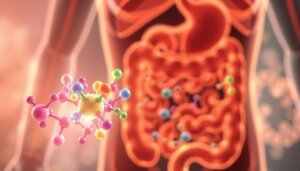


Did you know almost two-thirds of U.S. adults are overweight or obese? This affects their health a lot. GLP-1, or glucagon-like peptide-1, is key in fighting this problem. It helps control hunger and affects digestion and blood sugar.
GLP-1 receptor agonists like Ozempic and Wegovy are now used in medicine. They help manage weight. Also, the government is working to make these treatments cheaper. This could change how we treat obesity and metabolic disorders.
Key Takeaways
- GLP-1 plays a vital role in managing appetite and weight.
- Two-thirds of U.S. adults struggle with being overweight or obese.
- GLP-1 receptor agonists like Ozempic and Wegovy are key in treating obesity.
- Understanding GLP-1 helps in improving healthcare treatments.
- Government efforts aim to reduce costs for GLP-1 therapies.
Understanding GLP-1 and Its Role in Appetite Regulation
GLP-1, or glucagon-like peptide-1, is a hormone from the gut. It helps control hunger and how our body uses glucose. Knowing how GLP-1 works can help us manage our appetite and weight better.
What is GLP-1?
GLP-1 is a hormone made in the intestines. It affects how hungry we feel. It’s released when we eat and helps keep blood sugar levels stable.
It also helps insulin work better and stops glucagon from raising blood sugar. This is key for controlling hunger and keeping our metabolism healthy.
How Does GLP-1 Regulate Appetite?
GLP-1 slows down how fast food leaves our stomach. This makes us feel fuller longer. It also reduces our desire for foods high in calories.
GLP-1 affects our brain, helping us eat less. This makes it a big part of managing weight. Doctors now use GLP-1 receptor agonists to help with this.
Physiological Effects of GLP-1 on Hunger and Satiety
GLP-1 does more than just make us feel less hungry. It also helps us lose weight by making us feel full longer. People using GLP-1 treatments often eat less and have better metabolism.
This shows how important GLP-1 is for managing weight. It’s a key player in how we approach losing or maintaining weight.

| Function | Impact on Appetite | Effect on Weight Management |
|---|---|---|
| Increased insulin secretion | Reduces hunger signals | Supports weight loss efforts |
| Inhibition of glucagon release | Enhances satiety | Encourages lower caloric intake |
| Slows gastric emptying | Promotes prolonged fullness | Aids in effective appetite control |
GLP-1 Receptor Agonists: A New Era in Weight Management
GLP-1 receptor agonists are a big step forward in treating obesity and diabetes. They act like natural GLP-1, helping to control hunger and manage weight. Doctors can now use these treatments to help patients in a more personalized way.
Overview of GLP-1 Receptor Agonists
These medications are key in controlling blood sugar levels. They help by boosting insulin, cutting down on glucagon, and slowing down how fast food leaves the stomach. This leads to less hunger and eating less overall.
Commonly Used GLP-1 Medications
Several medications are commonly used in this class, including:
- Semaglutide (commonly sold under names like Ozempic and Wegovy)
- Tirzepatide (marketed as Mounjaro and Zepbound)
These treatments have shown great results. Many patients have lost a lot of weight and feel better overall thanks to them.
Benefits Beyond Appetite Control
GLP-1 receptor agonists do more than just control hunger. Studies show they can help people lose 15-20% of their weight. This can greatly improve metabolic health. They may also protect against heart disease, making them a key part of managing weight and blood sugar.
GLP-1 Appetite Control and Its Impact on Metabolism
GLP-1 plays a big role in controlling hunger and managing blood sugar. This hormone helps with weight control and improves overall health.
Influence on Blood Sugar Levels
GLP-1 helps control blood sugar by boosting insulin during meals. This makes it easier for the body to use glucose. It also stops the liver from releasing too much glucose.
This keeps blood sugar levels stable. It helps with weight control by reducing cravings and keeping you feeling full. This is key for glp-1 and satiety.
Effects on Fat Storage and Weight Loss
GLP-1 affects how the body stores fat. It helps with weight loss without the bad side effects of quick weight changes. It makes you eat less and feel full, leading to healthier eating.
This balanced eating supports weight management. Losing weight mainly by eating less is easier. It’s a simpler way to lose weight.
Studies show GLP-1 therapy reduces fat over time. This makes it a key part of health plans. For more on this, check out this study on GLP-1 and its effects on metabolism.
How to Naturally Boost GLP-1 Production
Boosting GLP-1 production helps with appetite control and health. Eating right, exercising regularly, and keeping your gut healthy are key. These actions greatly improve your overall well-being and how your body works.
Dietary Choices for Enhancing GLP-1 Secretion
Adding certain foods to your diet can boost GLP-1 levels. High-quality proteins like fish, poultry, and legumes keep you full. Soluble fibers in oats, beans, and some fruits also help.
These foods not only control hunger but also support your gut. This approach to health is all about balance.
The Role of Exercise in GLP-1 Levels
Exercise, whether light or intense, affects GLP-1 levels. It triggers hormones that boost GLP-1, helping control hunger. A regular exercise routine is key to keeping GLP-1 in balance.
Importance of Gut Health and Microbiome Support
A healthy gut microbiome is vital for GLP-1 activity. Foods like yogurt and kimchi, rich in probiotics, improve gut health. This supports GLP-1 production, leading to better appetite control and metabolic health.
The Future of GLP-1 Therapies and Their Implications
GLP-1 agonist therapy is changing how we manage metabolic disorders. It helps those with obesity and related issues. Research shows these therapies can also improve heart health.
This knowledge can lead to better care for patients. It’s a big step forward.
Emerging Research and Developments
Studies are showing GLP-1 therapies work well. They help with weight and might protect the heart. Recent trials show a drop in heart problems for those using these therapies.
As more research comes in, doctors will have new ways to help patients. This could lead to better health outcomes.
Potential Impact on Cardiovascular Health
GLP-1 therapies are key for heart health. They tackle weight and heart risks together. This could change how we treat heart diseases.
These therapies might make the heart work better. For more on this, check out this detailed article.
Conclusion
Mastering GLP-1 appetite control is key for better weight management and health. It’s important for doctors to know how GLP-1 works and how to boost its levels naturally. This knowledge helps in creating effective care plans for patients.
As research on GLP-1 grows, it’s vital for doctors to keep up. Staying updated helps in improving weight management strategies. It also makes patient care more effective and patient-friendly.
Sharing knowledge with other healthcare professionals is important. It leads to better patient care and stronger partnerships. Using GLP-1 therapies shows your dedication to finding new ways to improve health.